Alnor Oil
The Source for Imported & Domestic Vegetable Oils
Palm Oils
Applications:
Cooking oils, Detergents, Emulsifiers, Frying oil, Margarines, Non-dairy creamers, Shortenings, Soaps, Biodiesel
Product Information:
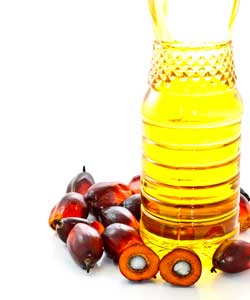
Palm Oils are derived from the pulp or fleshy portion of the palm fruit and are high in Palmitic acid (32-47%). Due to a near total absence of unsaturated fats, Palm oil is stable at high temperatures. Like Coconut oil, Palm oil can be split and fractionated to create Palm Olein and Palm Stearin.
Palm Olein has 55% unsaturated fat, is a soft oil and is better for heart health. It is trans fat free. Olein has narrow specifications.
Palm Stearin is a hard oil. Stearin can be produced with various specifications for different applications.
Low IV Palm Oil works well as a lubricant, encapsulating agent, stabilizer and emulsifier.